
Dowel pin size chart, spring pins and shaft keys
Parallel dowel pins, hardened and unhardened, slotted spring pins, and the two common shaft keys: the parallel key and the Woodruff key. The chart compares the lengths available for each pin diameter; each part has its own page with the full table and a CAD file for every size.
Dowel pin types and machine keys by standard
-
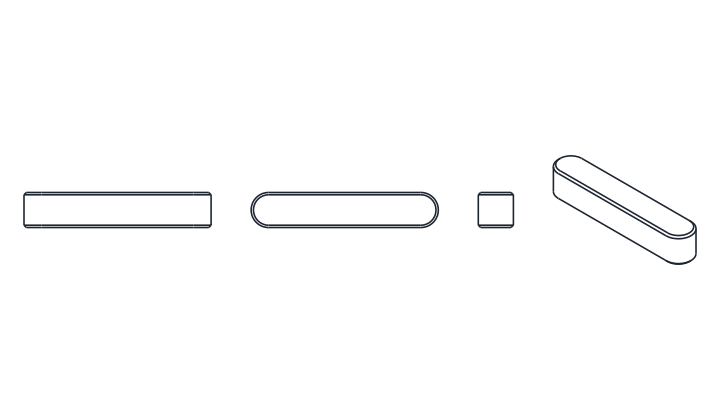 DIN 6885 parallel key, form AParallel key with round ends (form A), from 2 × 2 to 100 × 50 mm, with the keyway depths in the shaft and the hub.
-
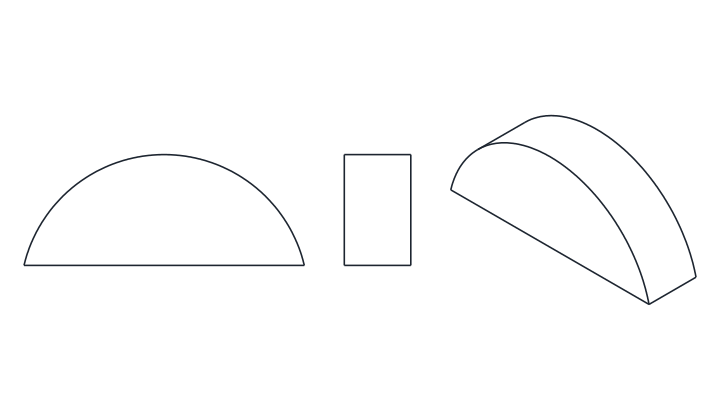 DIN 6888 Woodruff keyDisc-shaped key, a segment of a circle of diameter d2 and height h, for the A series keyways.
-
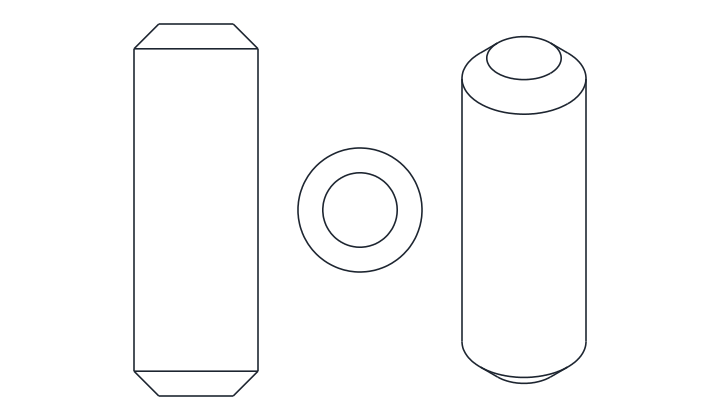 ISO 2338 / DIN 7 parallel pin, unhardenedUnhardened cylindrical pin with chamfered ends, from 2 to 20 mm diameter, in the stock lengths of each diameter.
-
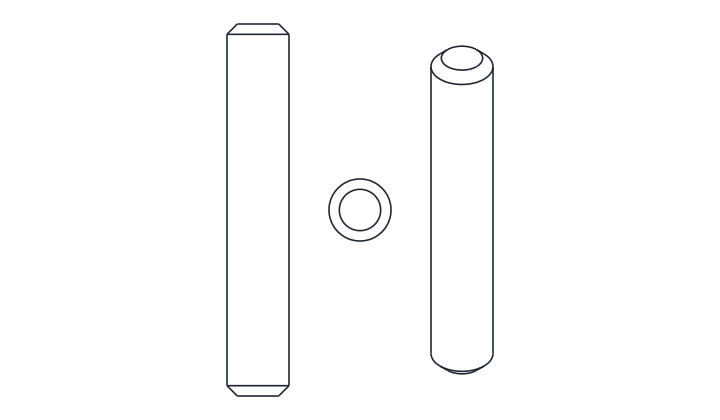 ISO 8734 / DIN 6325 dowel pin, hardenedHardened cylindrical dowel pin in tolerance m6, from 1 to 20 mm diameter, in the stock lengths of each diameter.
-
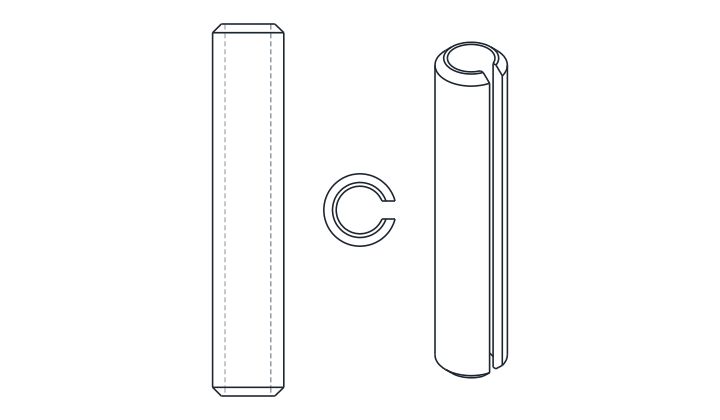 ISO 8752 / DIN 1481 spring pin, heavy dutySlotted spring pin, heavy series, from 1 to 20 mm nominal diameter, in the stock lengths of each size.
Metric dowel pin size chart
The size of a pin is its nominal diameter, which is also the hole it goes in. The chart gives the shortest and the longest length with a CAD file here for each type. Lengths in between follow the steps given on each pin's page.
| Diameter | Unhardened, fromISO 2338, mm | Unhardened, toISO 2338, mm | Hardened, fromISO 8734, mm | Hardened, toISO 8734, mm | Spring pin, fromISO 8752, mm | Spring pin, toISO 8752, mm | Spring pin wall sISO 8752, mm |
|---|---|---|---|---|---|---|---|
| 1 | – | – | 3 | 10 | 4 | 20 | 0.2 |
| 1.5 | – | – | 4 | 16 | 4 | 20 | 0.3 |
| 2 | 16 | 16 | 5 | 20 | 4 | 30 | 0.4 |
| 2.5 | – | – | 6 | 24 | 4 | 30 | 0.5 |
| 3 | 8 | 24 | 8 | 30 | 4 | 40 | 0.6 |
| 3.5 | – | – | – | – | 4 | 40 | 0.75 |
| 4 | 8 | 30 | 10 | 40 | 4 | 50 | 0.8 |
| 4.5 | – | – | – | – | 5 | 50 | 1 |
| 5 | 10 | 50 | 12 | 50 | 5 | 80 | 1 |
| 6 | 12 | 40 | 14 | 60 | 10 | 100 | 1.2 |
| 8 | 16 | 60 | 18 | 80 | 10 | 120 | 1.5 |
| 10 | 20 | 60 | 22 | 100 | 10 | 160 | 2 |
| 12 | 24 | 32 | 26 | 100 | 10 | 180 | 2.5 |
| 13 | – | – | – | – | 10 | 180 | 2.5 |
| 14 | – | – | – | – | 50 | 90 | 3 |
| 16 | 40 | 60 | 40 | 100 | 24 | 160 | 3 |
| 20 | 40 | 40 | 50 | 100 | 50 | 60 | 4 |
A dash means that diameter is not in the standard.
Standard dowel pin tolerances and holes
A solid dowel pin is ground to a tolerance class that is part of its designation. The unhardened ISO 2338 pin comes in m6 or h8, and the hardened ISO 8734 pin in m6. Whether the pin ends up as a press fit or a sliding fit depends on the hole: a reamed hole is the usual choice for locating parts, with the hole tolerance chosen to give the fit you need.
A spring pin works the other way. It is slotted and slightly larger than its nominal size before fitting, 6.4 to 6.7 mm for a 6 mm pin, and is compressed as it is driven into a plain drilled hole of the nominal diameter. It needs no reaming, but it does not locate as precisely as a solid pin.
Parallel key and Woodruff key sizes
The DIN 6885 parallel key is chosen by shaft diameter: each width and height covers a range of shafts, for example a 5 × 5 key for shafts over 12 mm up to 17 mm. Its page gives the keyway depth in the shaft (t1) and in the hub (t2) for every size.
The DIN 6888 Woodruff key is a half disc that sits in a round-bottomed seat, so it can tilt to follow the hub. It is common on tapered shafts and small shafts.
Dowel pins and keys: common questions
- What is the difference between ISO 2338 and ISO 8734 dowel pins?
- ISO 2338 pins are unhardened, in m6 or h8. ISO 8734 pins are hardened, made in m6, and are the usual choice for locating hardened or heavily loaded parts. Both are solid cylindrical pins with chamfered or rounded ends.
- What size hole does a 6 mm spring pin need?
- A 6 mm drilled hole. The pin measures 6.4 to 6.7 mm before fitting and closes its slot as it goes in, which is what keeps it in place.
- Which key size goes on a 20 mm shaft?
- A DIN 6885 parallel key 6 × 6, which covers shafts over 17 mm up to 22 mm. The keyway is 3.5 mm deep in the shaft and 2.8 mm in the hub.