
Steel section tables: IPE, HEA, HEB, UPN, angles and hollow sections
European hot rolled I and H beams, channels and angles, and cold formed square and rectangular hollow sections. The chart compares the three beam families at the same nominal size; each section has its own page with the full table of dimensions and properties and a CAD file for every size.
Steel profiles by family: beams, channels, angles and hollow sections
-
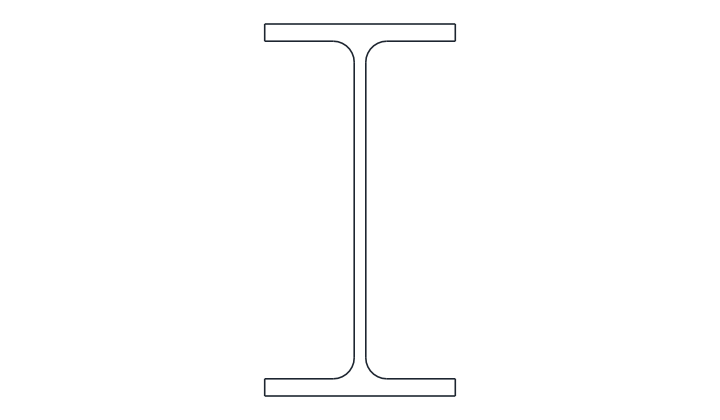 IPE beamEuropean parallel flange I-beam, from IPE 80 to IPE 600, to EN 10365.
-
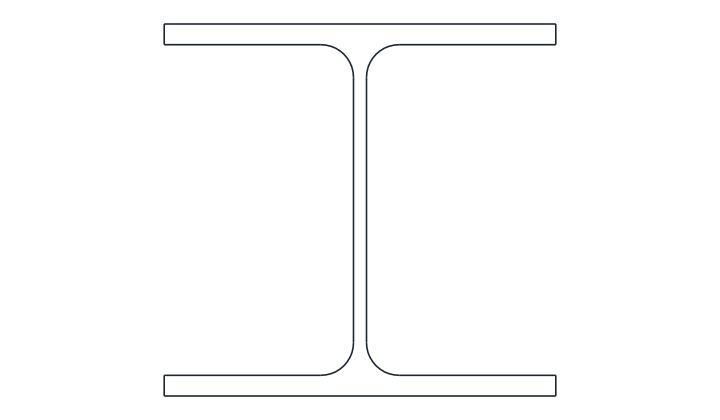 HEA wide flange beamEuropean wide flange H beam, light series, from HEA 100 to HEA 1000 to EN 10365.
-
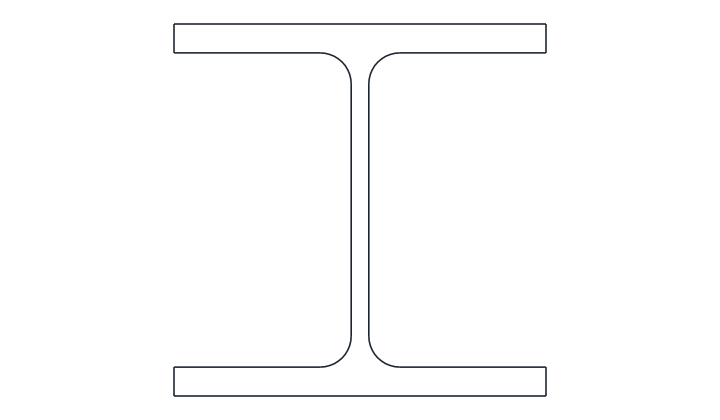 HEB wide flange beamEuropean wide flange H beam, medium series, from HEB 100 to HEB 1000 to EN 10365.
-
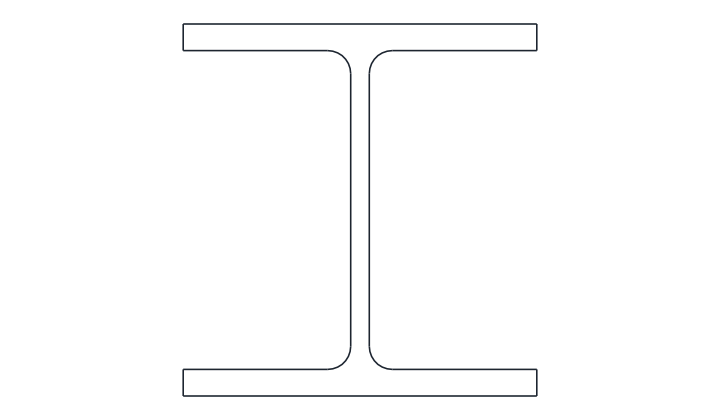 W beam, metric seriesWide flange W sections in the metric series rolled to ASTM A6, from W 150 x 18.0 to W 610 x 174.0.
-
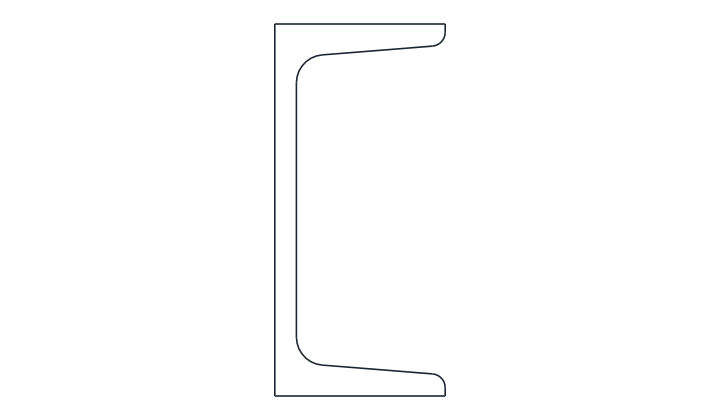 UPN channel with tapered flangesEuropean channel with tapered flanges, from UPN 50 to UPN 400, to EN 10365.
-
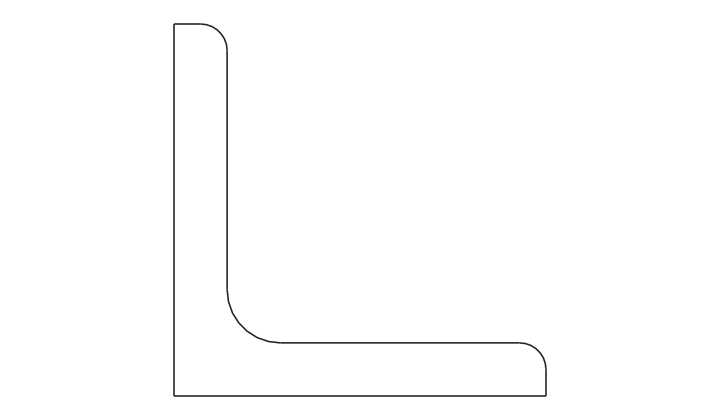 Equal angleHot rolled equal leg angle to EN 10056-1, from 30 × 30 × 3 to 200 × 200 × 26.
-
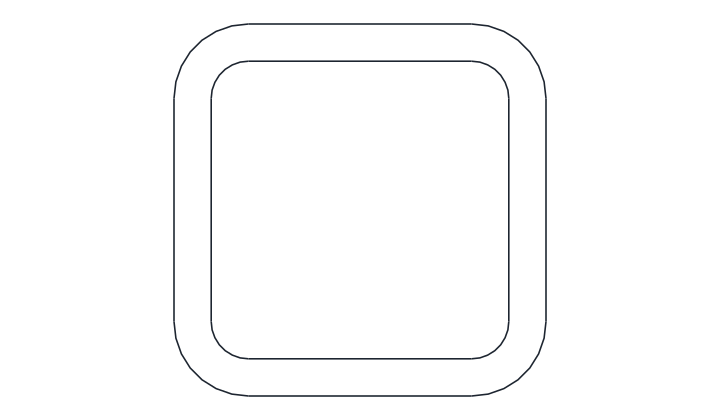 SHS square hollow sectionCold formed square steel tube to EN 10219-2, from 30 × 30 × 3 to 160 × 160 × 12 in the common wall thicknesses.
-
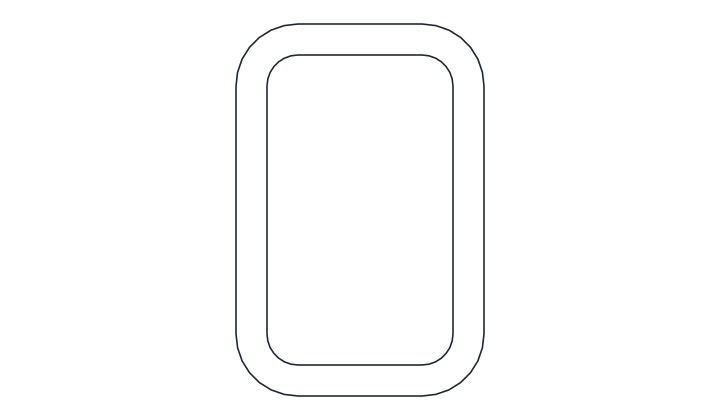 RHS rectangular hollow sectionCold formed rectangular steel tube to EN 10219-2, from 50 × 30 × 3 to 250 × 100 × 10 in the common wall thicknesses.
Steel section sizes: IPE, HEA and HEB side by side
The number in the name is the nominal size. In IPE and HEB it is the height h in millimetres; HEA sections are a little lower than their number. Weight G is the mass per metre, calculated from the area of the section.
| Nominal size | IPE hmm | IPE bmm | IPE Gkg/m | HEA hmm | HEA bmm | HEA Gkg/m | HEB hmm | HEB bmm | HEB Gkg/m |
|---|---|---|---|---|---|---|---|---|---|
| 80 | 80 | 46 | 6 | – | – | – | – | – | – |
| 100 | 100 | 55 | 8.104 | 96 | 100 | 16.67 | 100 | 100 | 20.44 |
| 120 | 120 | 64 | 10.37 | 114 | 120 | 19.89 | 120 | 120 | 26.69 |
| 140 | 140 | 73 | 12.89 | 133 | 140 | 24.66 | 140 | 140 | 33.72 |
| 160 | 160 | 82 | 15.77 | 152 | 160 | 30.44 | 160 | 160 | 42.59 |
| 180 | 180 | 91 | 18.8 | 171 | 180 | 35.52 | 180 | 180 | 51.22 |
| 200 | 200 | 100 | 22.36 | 190 | 200 | 42.26 | 200 | 200 | 61.29 |
| 220 | 220 | 110 | 26.2 | 210 | 220 | 50.51 | 220 | 220 | 71.47 |
| 240 | 240 | 120 | 30.71 | 230 | 240 | 60.32 | 240 | 240 | 83.2 |
| 260 | – | – | – | 250 | 260 | 68.15 | 260 | 260 | 92.98 |
| 270 | 270 | 135 | 36.07 | – | – | – | – | – | – |
| 280 | – | – | – | 270 | 280 | 76.35 | 280 | 280 | 103.1 |
| 300 | 300 | 150 | 42.24 | 290 | 300 | 88.33 | 300 | 300 | 117 |
| 320 | – | – | – | 310 | 300 | 97.63 | 320 | 300 | 126.7 |
| 330 | 330 | 160 | 49.15 | – | – | – | – | – | – |
| 340 | – | – | – | 330 | 300 | 104.8 | 340 | 300 | 134.2 |
| 360 | 360 | 170 | 57.09 | 350 | 300 | 112.1 | 360 | 300 | 141.8 |
| 400 | 400 | 180 | 66.3 | 390 | 300 | 124.8 | 400 | 300 | 155.3 |
| 450 | 450 | 190 | 77.57 | 440 | 300 | 139.8 | 450 | 300 | 171.1 |
| 500 | 500 | 200 | 90.68 | 490 | 300 | 155.1 | 500 | 300 | 187.3 |
| 550 | 550 | 210 | 105.5 | 540 | 300 | 166.2 | 550 | 300 | 199.4 |
| 600 | 600 | 220 | 122.4 | 590 | 300 | 177.8 | 600 | 300 | 211.9 |
| 650 | – | – | – | 640 | 300 | 189.7 | 650 | 300 | 224.8 |
| 700 | – | – | – | 690 | 300 | 204.5 | 700 | 300 | 240.5 |
| 800 | – | – | – | 790 | 300 | 224.4 | 800 | 300 | 262.3 |
| 900 | – | – | – | 890 | 300 | 251.6 | 900 | 300 | 291.5 |
| 1000 | – | – | – | 990 | 300 | 272.3 | 1,000 | 300 | 314 |
A dash means the family has no section of that size.
Structural steel section types and when each is used
IPE beams have flanges much narrower than their height: deep and light, they suit beams that bend about one axis. HEA and HEB are wide flange sections, with flanges as wide as the section is high up to size 300. HEB is the heavier of the two: at size 200 it weighs 61.3 kg/m against 42.3 kg/m for HEA, and both are used for columns and heavily loaded beams. The W series is the wide flange beam of ASTM A6, used in the Americas, here in the metric sizes rolled in Brazil.
UPN channels have tapered flanges and are used for frames, trimmers and bracing. Equal angles go into bracing, frames and brackets, and the cold formed SHS and RHS hollow sections into columns, trusses and frames where a closed section is stiffer in torsion.
Steel section weight per metre
The weight G in every table is the area of the section times a steel density of 7,850 kg/m³. An IPE 200 has an area of 28.48 cm², so it weighs 22.36 kg per metre. To get the weight of a bar, multiply G by its length in metres.
The area includes the root radii between web and flange, which add a few percent over a sharp-cornered section. That is why a quick calculation from the plate thicknesses alone gives a lower figure than the catalogues.
Steel section properties: how they are calculated
Area, second moments of area (Iy, Iz), elastic section moduli (Wel) and radii of gyration (i) are calculated on the exact cross-section of each CAD model, with its radii and, for UPN, its flange taper. Every value is then compared with the steel mill catalogues, and a section is published only if every property agrees within 1%. Sizes that did not pass are left out rather than shown with a value we cannot back.
Plastic section moduli and warping constants are not given yet. For design to Eurocode 3, take those from your section supplier's tables.
Steel sections: common questions
- What is the difference between IPE, HEA and HEB?
- IPE is a narrow flange I-beam. HEA and HEB are wide flange H-sections, with HEB being thicker and heavier than HEA at the same nominal size. At size 200 an IPE weighs 22.4 kg/m, an HEA 42.3 kg/m and an HEB 61.3 kg/m.
- How much does an IPE 200 weigh per metre?
- 22.36 kg/m, from an area of 28.48 cm² and a density of 7,850 kg/m³. It is 200 mm high and 100 mm wide, with a 5.6 mm web and 8.5 mm flanges.
- Which standards give these dimensions?
- EN 10365 covers the dimensions of IPE, HEA, HEB and UPN, EN 10056-1 equal angles, and EN 10219-2 the cold formed hollow sections. The values here come from the steel mill catalogues that follow those standards.